Category

Temperature

2 Degrees C., 1 Degree C. or 0 Degrees C.?

By Abrupt changes, Climate Policy, Climate Reform, economics, Forest Mortality, Legacy Policy, Strategy, Temperature

Two degrees C was first suggested as an upper limit to where we should allow our climate to warm by Nordhaus (Yale) in the American Economic Review in 1977 with the justification that this amount of change would exceed the temperature envelope where our mature civilization has developed. Nordhaus cites Sellers 1974 and NCAR 1974…

Read More

An Easier Solution to Climate Change

By Abrupt changes, adaptation, aerosols, alternatives, Climate Policy, climate pollutants short-lived, Climate Reform, CO2 Removal and Sequestration, economics, Extreme Weather, in-depth and Popular Press, Sea Level Rise, Shifting Ecology, Strategy, Temperature, What we can do

The driver of our climate system has changed in the last two decades from one that is controlled by annual emissions, to one that is controlled by already emitted CO2. This means that previous strategies to control annual emissions are no longer meaningful and we must now turn our attention to the already emitted climate…

Read More

Godzilla Niño and the Blob: How Weather Cycles and Ocean Temperatures Mask Global Warming

By Gulf Stream, in-depth and Popular Press, Oceans, pause hiatus, Temperature, Uncategorized

First published on Truthout: October 4, 2015. Over 20 years after a global consensus of earth scientists at the Rio Earth Summit first suggested we control carbon dioxide emissions to prevent dangerous climate change, the United States has finally acted. This is excellent news for 20 years ago but today, Kyoto V2 (the EPA’s Clean…

Read More

Temperature Pause 8: Abrupt Increase in Indian Ocean Heat Content

By Oceans, pause hiatus, Temperature

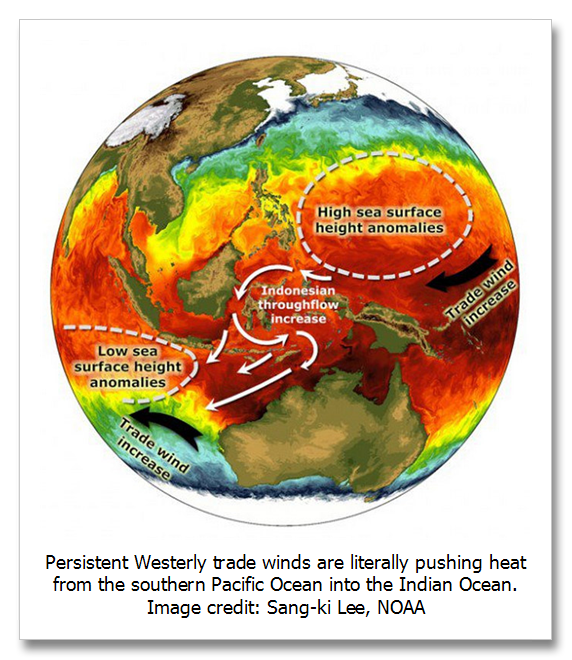
Once again we ask “why has the apparent global temperature lagged behind accelerating CO2 emissions”? The reasons are numerous and logical, yet the media and prominent climate change deniers continue to ignore their significance, if they even understand they exist at all. Cherry picking the beginning point of the so-called hiatus by starting it during…

Read More

IPCC: More Than All of Observed Warming Has Been Caused by Humanity’s Emissions

By aerosols, Emissions, in-depth and Popular Press, Temperature

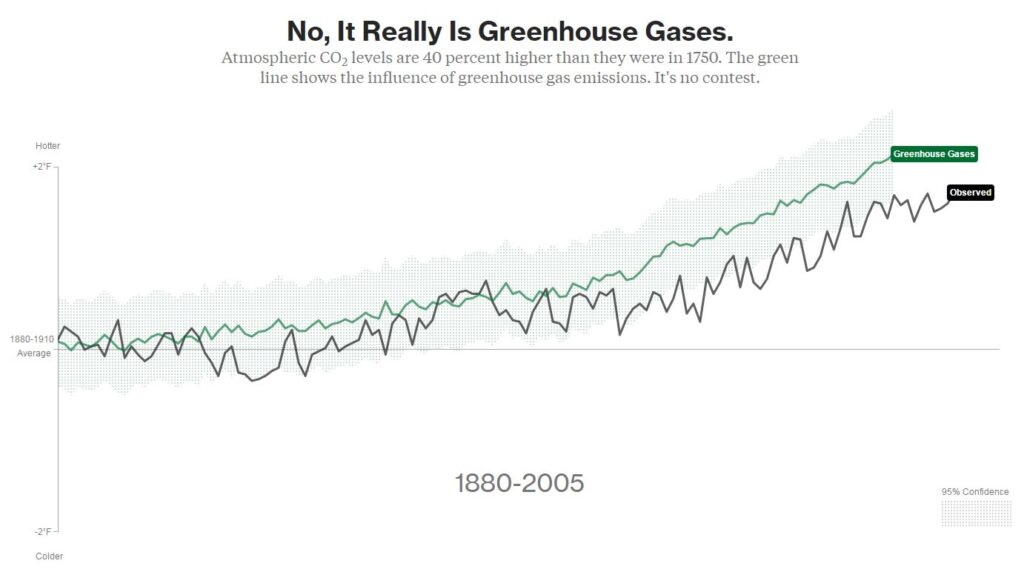
First published on Truthout.org April 24, 2015. “The best estimate of the human-induced contribution to warming is similar to the observed warming [from 1951 through 2010].” IPCC 2013, Summary for Policy Makers.(1) This statement differs radically from the almost ubiquitous understanding that part of global warming has been caused by humanity and part is natural. In…

Read More

Antarctic Maximum Temperature Record

By Extreme Weather, Temperature

From the National Snow and Ice Date Center: “Air temperatures reached record high levels at two Antarctic stations last week, setting a new mark for the warmest conditions ever measured anywhere on the continent. On March 23, at Argentina’s base Marambio, a temperature of 17.4° Celsius (63.3° Fahrenheit) was reached, surpassing a previous record set…

Read More

Temperature Pause 7: Unprecedented North Pacific Warming Ends Cool Phase

By Myths, Oceans, Temperature

Whatever it has been that has kept the average global temperature from skyrocketing along with greenhouse gas concentrations is likely being overwhelmed. Of most significance is an unprecedented hot spot in the North Pacific that has probably signaled an end to the current cool phase of the Pacific Decadal Oscillation. Last summer’s global sea surface…

Read More

Polar Vortex: February 2015 Temperature Departure

By polar vortex, Temperature

From the National Snow and Ice Data Center Website for March 4, 2015. There were four warm temperature state records set in February but surprisingly, no record cold state temperature records were set. There were 13 near-record cold state temperatures (2nd through 5th coldest) and three near-record warm state records (2nd and 3rd warmest). http://nsidc.org/arcticseaicenews/2015/03/possibly-low-in-the-north-definitely-high-in-the-south/…

Read More

2014: Hottest Year Ever (?)

By Temperature, Truthout.org

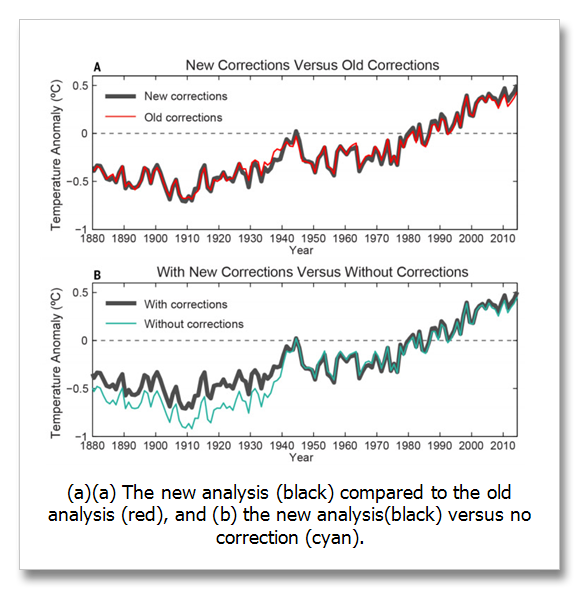
First published on Truthout, February 11, 2015. The last time we had this discussion was 2013, remember? Before that it was 2010. Before that it was 2005 and everything started with the Super El Nino in 1998. Statistically, saying that 2014 was the hottest year ever is a very valid thing and if you understand…

Read More

UK Met Weather Service: “Dramatic Increasing” European Heat Waves since 2003”

By Climate Catastrophes, Extreme Weather, Temperature

Varying reports reveal that “tens of thousands” of individuals died in Europe in the 2003 heat wave with 15,000 in France alone. Reporting today still use the inaccurate estimates from the day. The European Union sponsored a study that laid to rest the speculation but this study’s results are so astonishing the numbers are still…

Read More

Temperature Changes: It’s Not All About the Average Global Temperature

By Extreme Weather, Forest Mortality, Impacts, pine beetle, Temperature

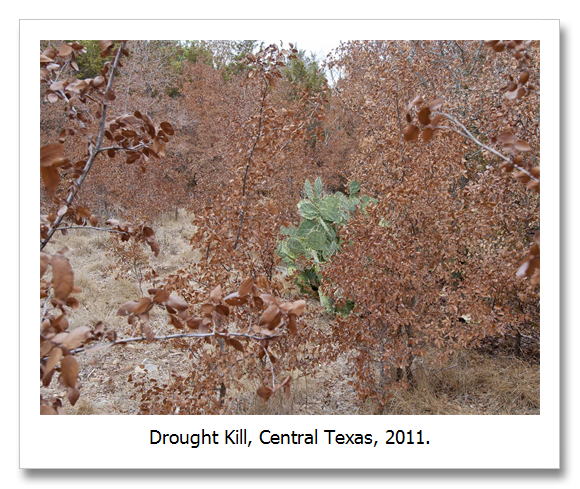
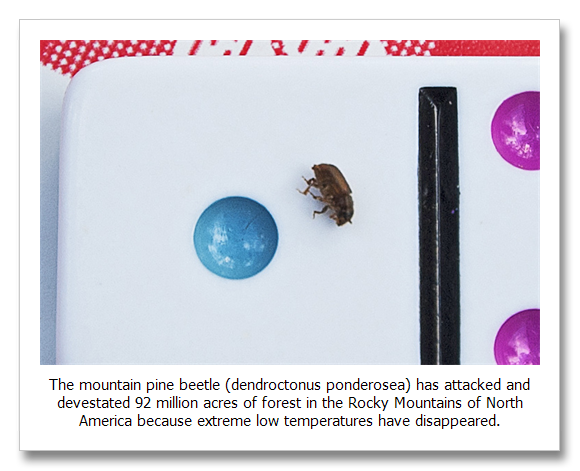
Earth has warmed about 0.9 degrees C on average and the Arctic on average has warmed two to three times as much as the average. Daily temperature variation and annual temperature variation make a difference. Climate scientists have been warming us for over a generation that climate change would mean greater insect infestations on a…

Read More

The Pause… The Hiatus… Temperature Flattening Myth, Part 6

By Myths, pause hiatus, Temperature

Work from the  Climate Change Research Centre, UNSW (The University of New South Wales), Australia Shows what temps would be like without anthropogenic interference—including aerosols in the mid 20th century! These researchers used the latest generation of climate model simulations  to investigate the occurrence of hiatus periods in the past and under two future scenarios….

Read More

With This Decade’s Climate Policy, Expect More Warming Than if Nothing Was Done at All, by Bruce Melton

By Abrupt changes, Climate Policy, climate pollutants short-lived, CO2 Removal and Sequestration, Emissions, Emissions Scenarios, in-depth and Popular Press, Methane, Temperature, Truthout.org

First Published on Truthout, August 27, 2014 (link) The fundamental climate change policy question today is not how much we should reduce carbon dioxide emissions by when, but what will currently proposed carbon dioxide emissions reductions do to our climate in the near-term? In addition, what are the ramifications of short-lived climate pollutants that are…

Read More