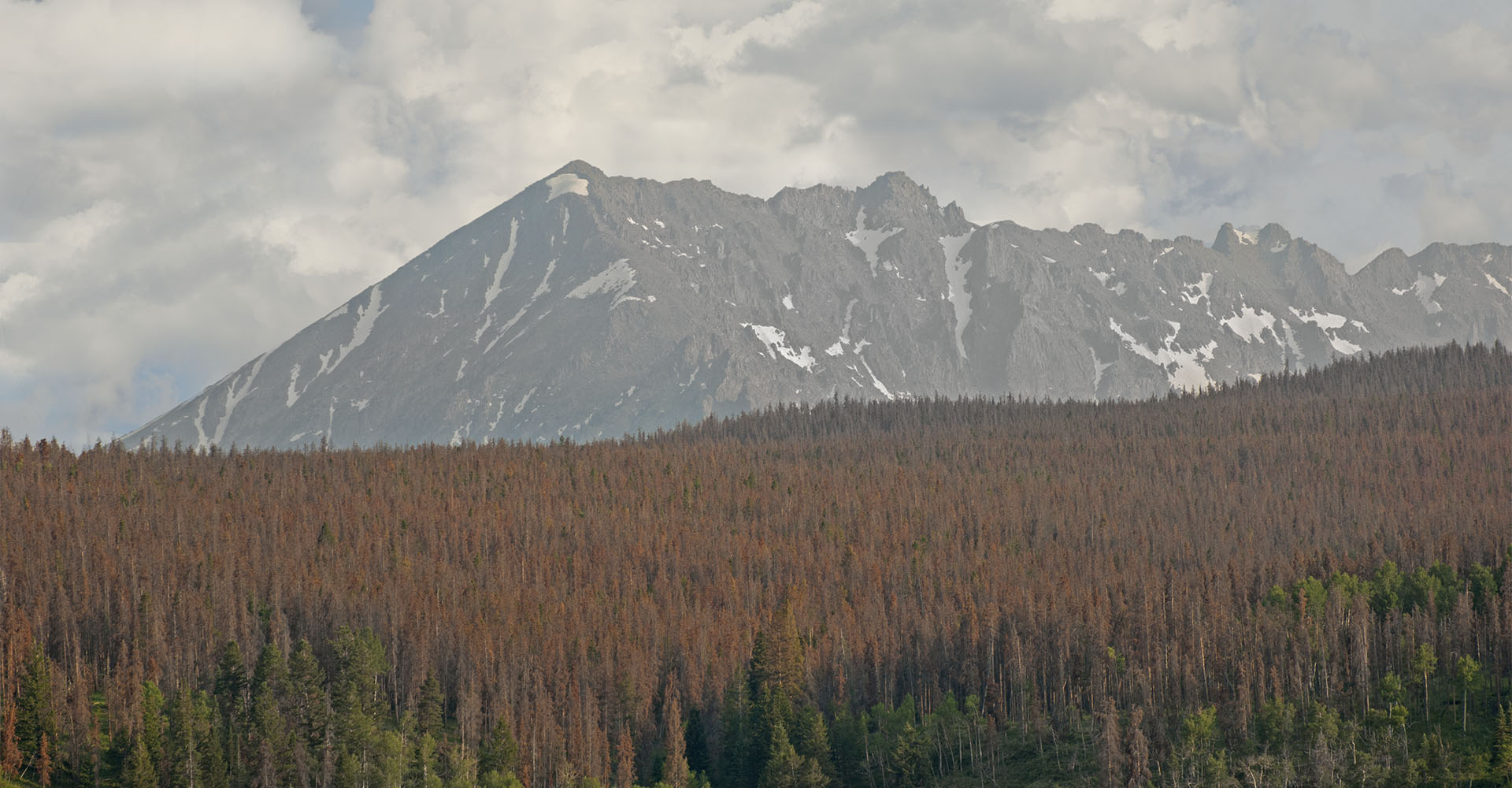
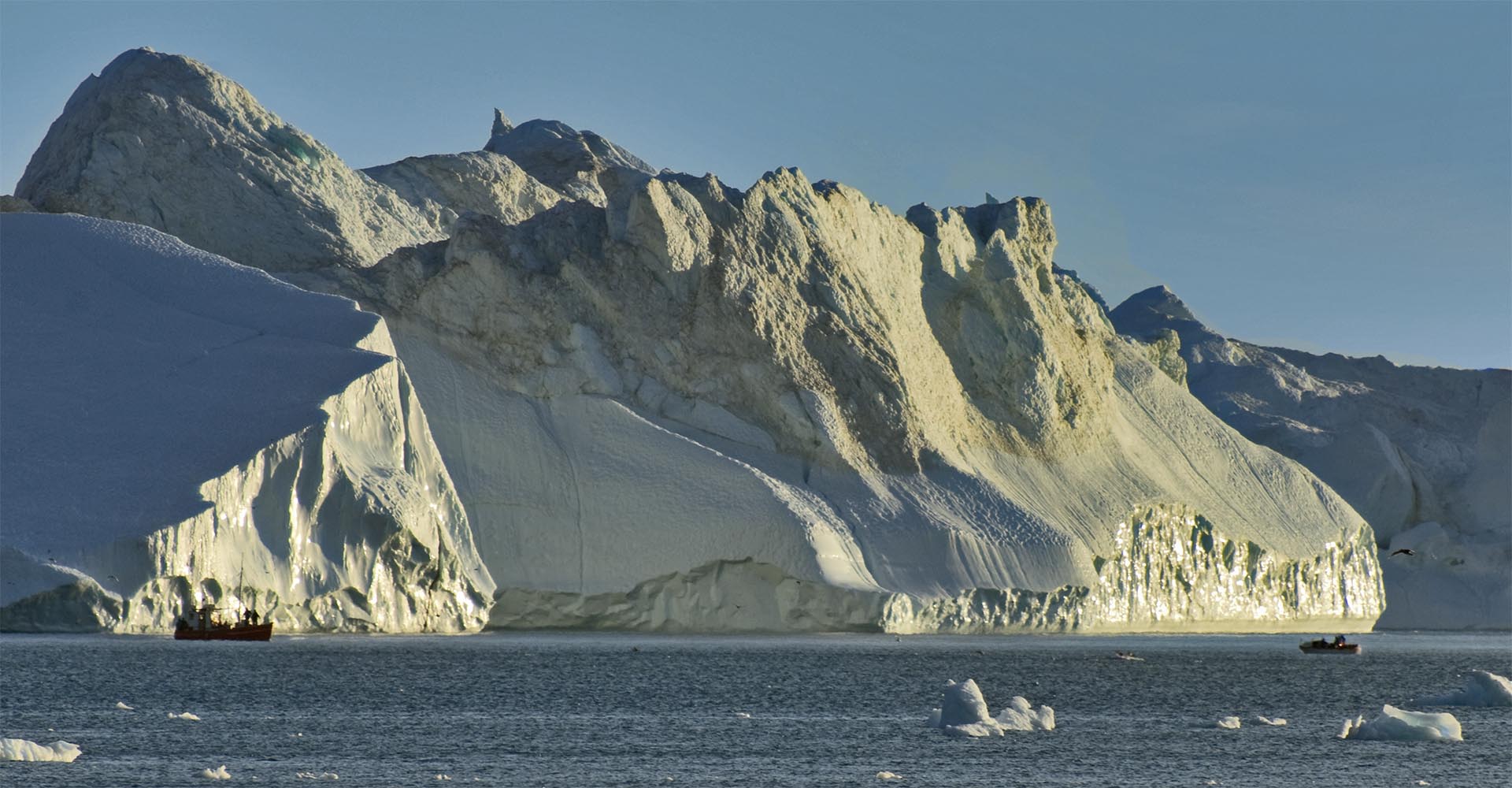
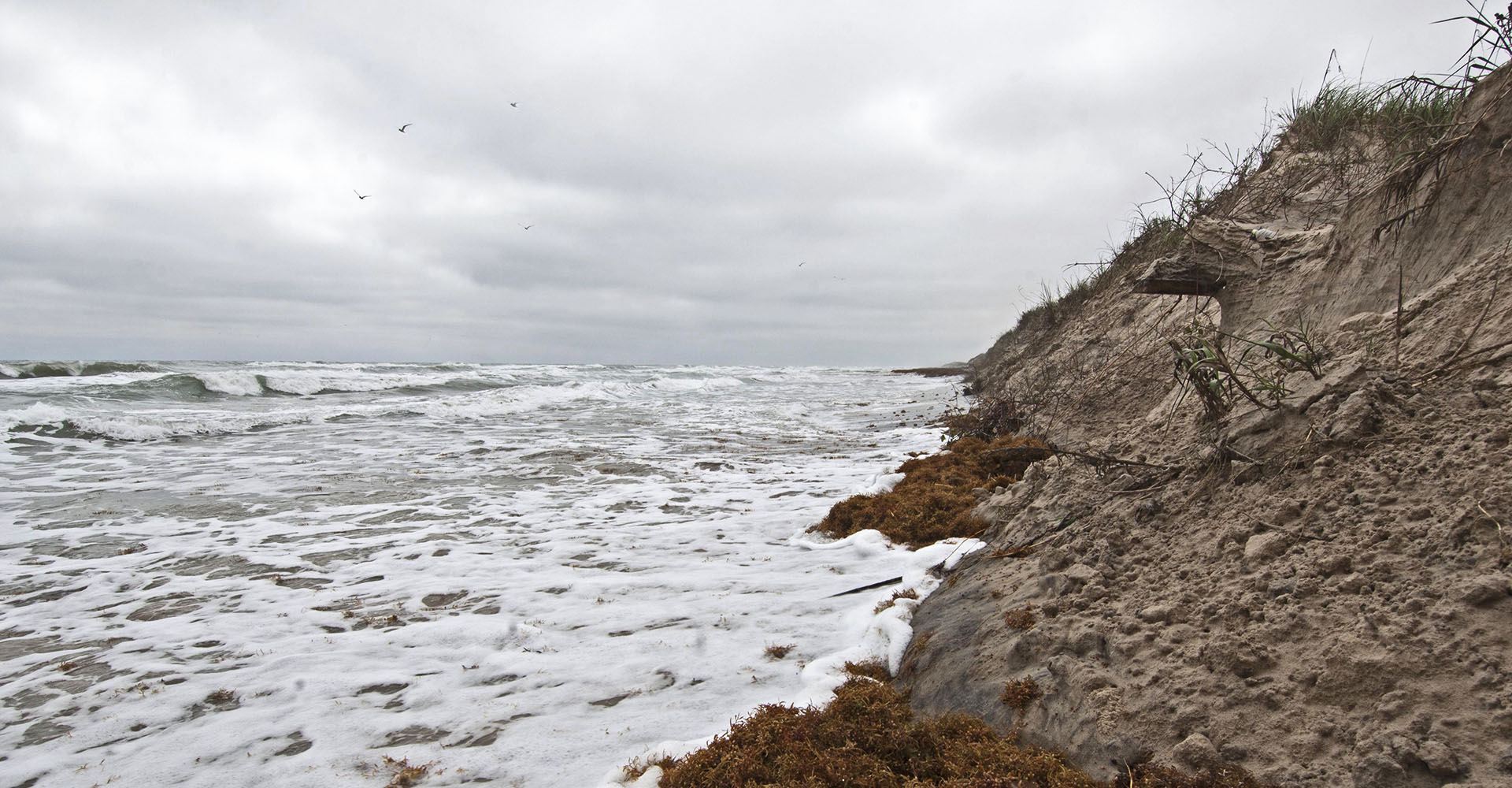
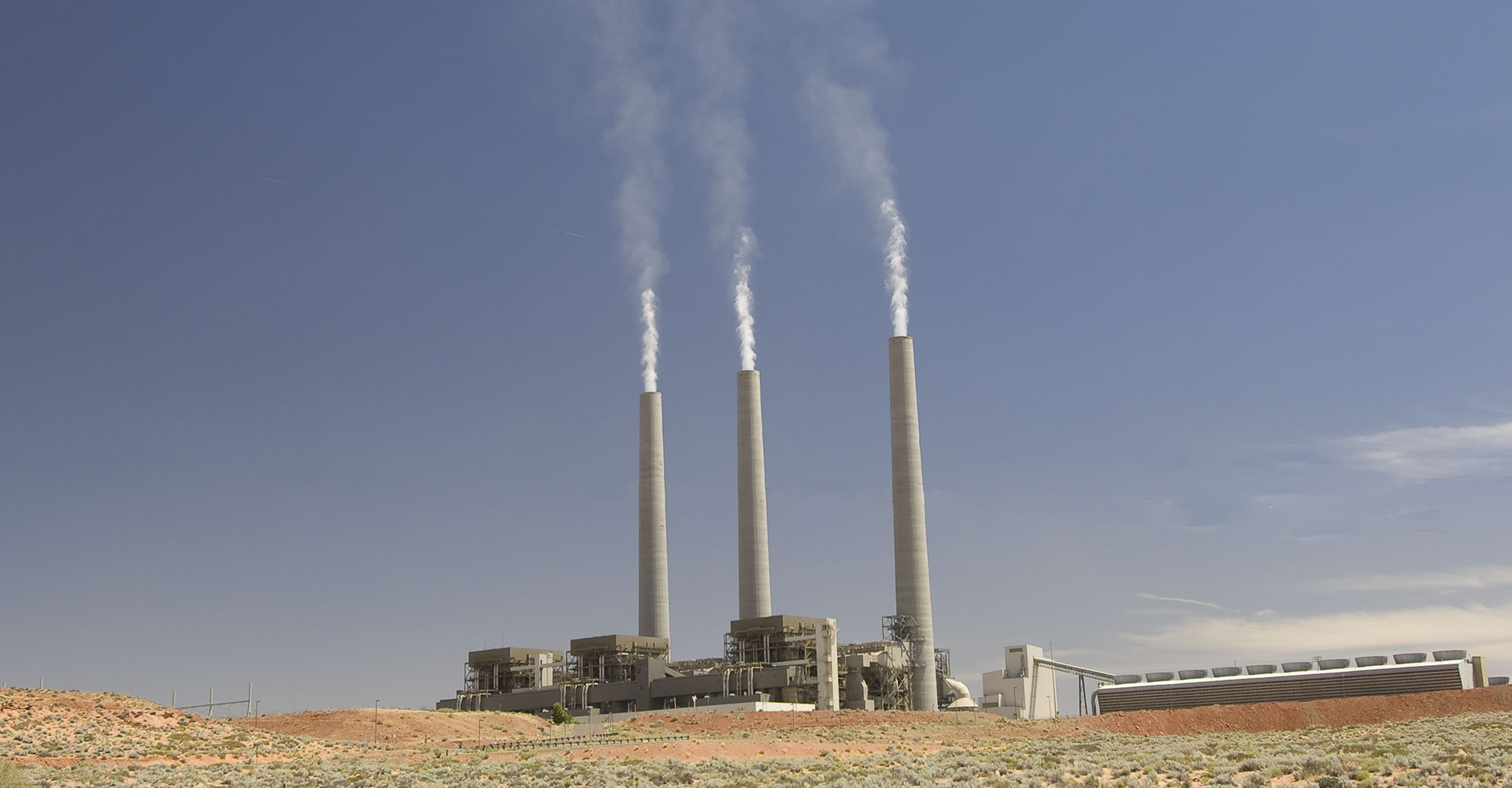
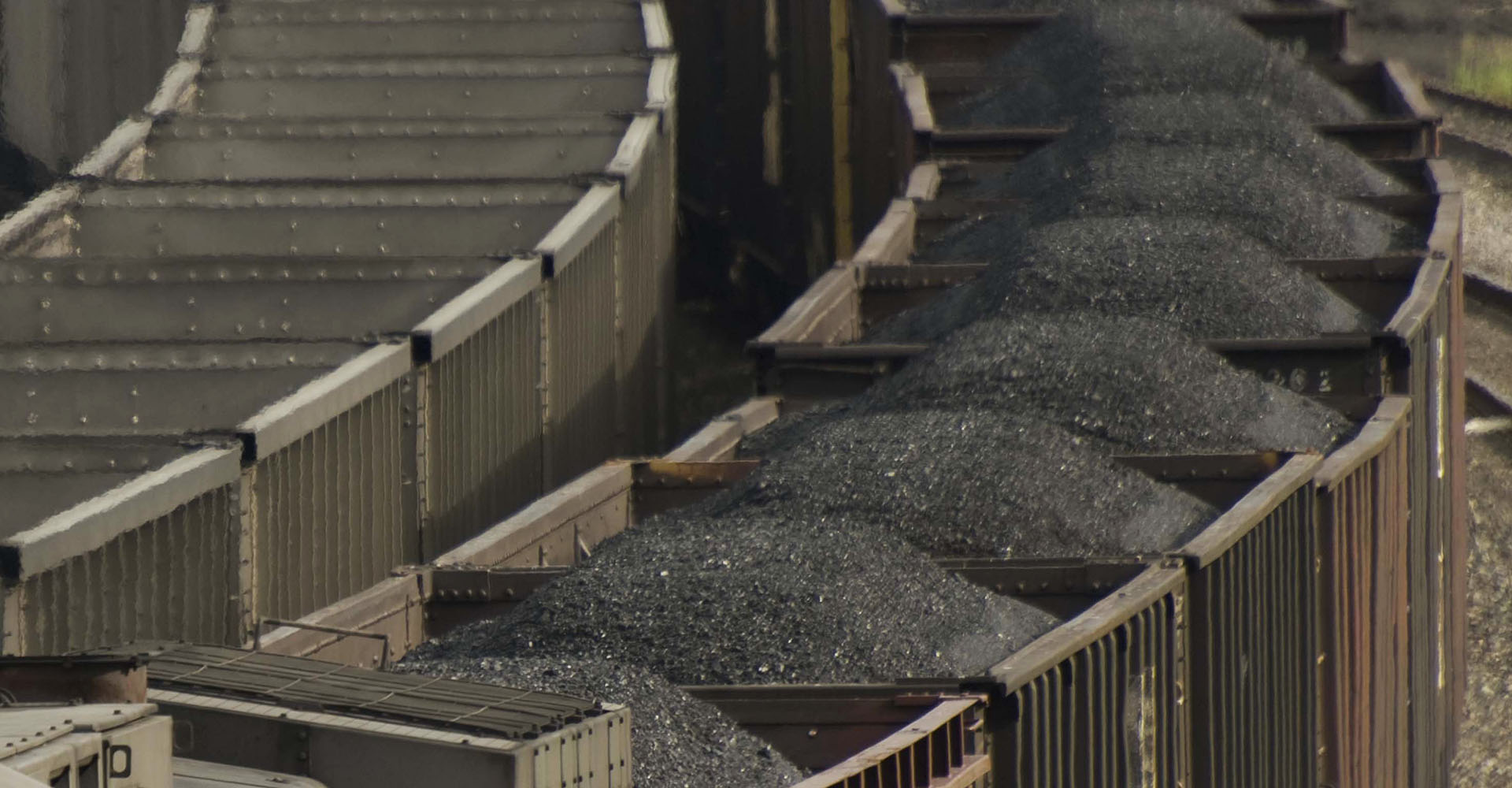
The perceived debate has devastated traditional climate science education The solutions however, are not what they seem New technologies are vastly more cost effective than this "perceived debate" implies Climate Change ... and will get much worse faster Are as bad -or worse- than they seem because of previous delay Impacts are no more costly than what we spend on advertising every year... Solutions Climate Discovery brings you the real science More robust than every before Using plain English The written word For more, swipe on, scroll down or click the menu From the field and from academia Films and music 92 million acres of forest killed: by a native beetle gone berserk because of warming. 500% increase: Greenland ice loss ... in last 10 years. Previously stable beaches already gone ... during normal, non-storm conditions. Research now shows that global cooling smog from coal has masked more than half of current warming that should have already occurred. reveals the masked warming creating more warming than if we did nothing at all. -- when emissions of sulfates cease in the next 20 to 30 years Killing Coal Leave it in the ground Take it out of the sky Hurry... ... We do not have time to wait any longer Climate Discovery and the We make the science clear. Climate Change Now Initiative:

Solutions Our Films In-depth Knowledgebase Galleries Knowledge Base Lines blur between climate change and reality

A review of World Scientists’ Warning of a Climate Emergency 2022 in Bioscience, October 26, 2022

By Abrupt changes, adaptation, climate emergency, Climate Policy, Climate Reform, climate restoration, climate solutions, CO2 Removal and Sequestration

A review of Ripple et al., World Scientists’ Warning of a Climate Emergency 2022, Bioscience, October 26, 2022. The report opens, “We are now at “code red” on planet Earth. Humanity is unequivocally facing a climate emergency. The scale of untold human suffering, already immense, is rapidly growing with the escalating number of climate-related disasters….

Read More

Western Wildfire Increases Hail and Heavy Rain in Central US

By aerosols, Extreme Weather, Fire, rainfall

Western Wildfires Increase Extremeness of Weather in the Central US by a Third Climate change: Expect the unexpected. How can western wildfires increase the extremeness of weather in the Central US? Heat injected into the atmosphere enhances high pressure because heat rises and high pressure is rising air. This increase in high pressure increases westerly…

Read More

9-23-22: Sequoia Burn – Ongoing Collapse of the Unburnable

By Podcasts

Rag Radio 2022-09-23 – Bruce Melton on Climate Change & the Sequoia Burn by Rag Radio with Thorne Dreyer Podcast – https://archive.org/details/rag-radio-2022-09-23-bruce-melton Bruce Melton is Thorne Dreyer’s guest on Rag Radio. He is our regular commentator on climate issues, having been on the show multiple times. Bruce recently wrote for The Rag Blog about his filming of the…

Read More

Sequoias Burn: Ongoing Collapse of the Unburnable

By Abrupt changes, adaptation, Emissions flip, Fire, forest health, Forest Mortality, Gigs and Presentations, Impacts, in-depth and Popular Press, The Unexpected

Sequoias Burn: Ongoing Collapse of the Unburnable By Bruce Melton PE, Director of the Climate Change Now Initiative 2005, ClimateDiscovery.org (Co-published on the Rag Blog for an interview on Rag Radio in Austin, syndicated on Pacifica, September 23, 2022, 2 to 3 pm Central – KOOP 91.7 FM Streaming) The National Park Service says sequoias…

Read More

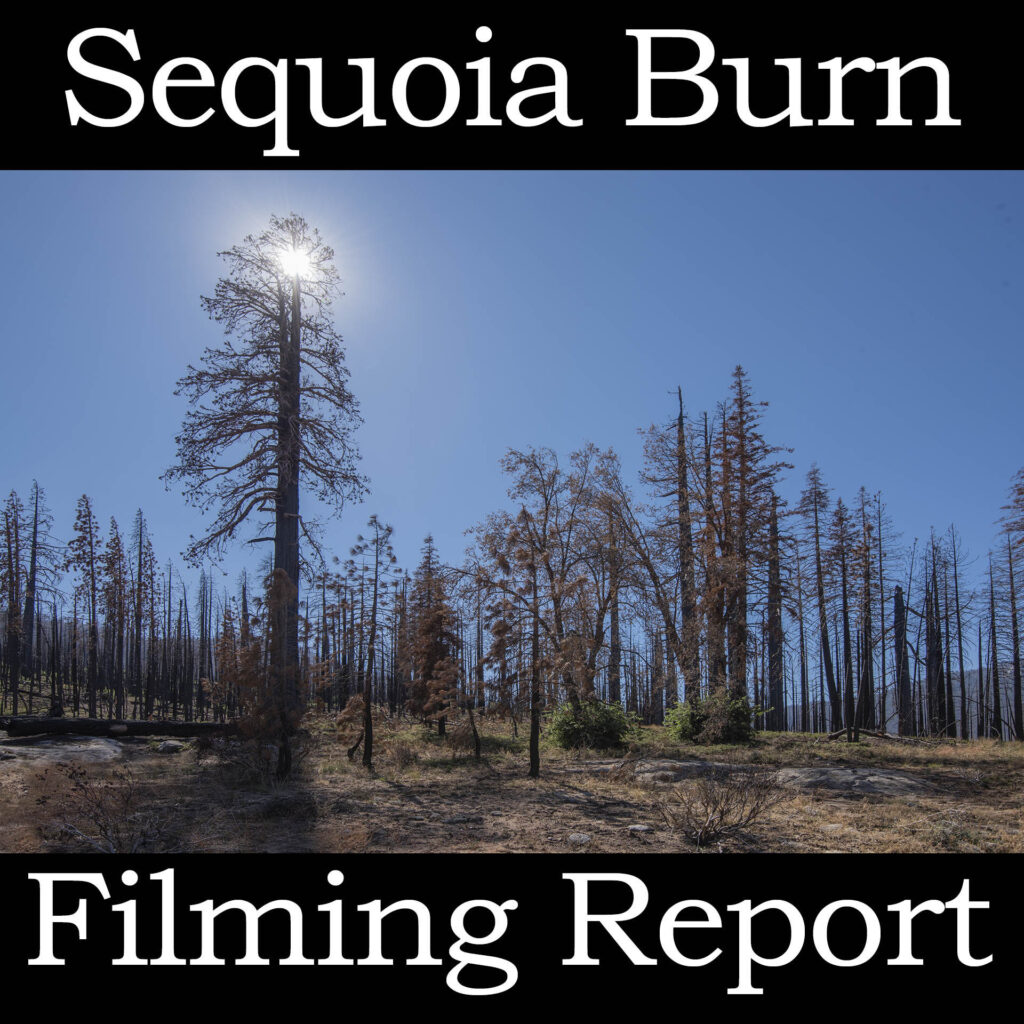
Filming Report: Sequoia Burn

By Uncategorized

Summer Filming 2022, Sequoia Burn This summer filming season we focused on just one thing. The sequoia burn in California in 2020 and 2021 that killed about 13,000 of the known 75,000 mature sequoias in all of existence, where in recorded history only several hundred sequoias have died, and most of them simply fell over….

Read More

Giant Sequoias: A Tipping Point

By Abrupt changes, adaptation, Climate Catastrophes, climate emergency, climate restoration, Drought, Earth systems, Fire, forest health, Forest Mortality, Impacts, in-depth and Popular Press, Legacy Policy, pine beetle, Shifting Ecology, The Unexpected, Tipping

The Sequoia Burn Giant Sequoias: A Climate Tipping Point by Bruce Melton PE Follow MeltOn in the field on Instagram See the abridged version on Truthout.org: August 9, 2022. Summary: Up to 13,000 mature sequoias were killed by wildfire between 2015 and 2021, with a total known population of only about 75,500 mature trees. Sequoias…


Read More

When Normals Are Not Normal: The National Weather Service Is Unwittingly Obscuring the Reality of Global Warming

By Climate Culture, Deniers and Delayers, Extreme Weather, global warming psychology, Impacts, in-depth and Popular Press, Legacy Policy, Messaging, Myths, Strategy, Temperature, The Unexpected, Truthout.org, What we can do

When Normals Are Not Normal The National Weather Service Is Unwittingly Obscuring the Reality of Global Warming by Bruce Melton PE See the abridged version on Truthout.org, July 17, 2022 In-depth references are below the article. Summary: The National Weather Service has a periodic procedure where they recalculate the “normal” climate data presented to the…

Read More

Chama Radio, New Mexico – Podcast

By climate restoration, CO2 Removal and Sequestration, Emissions flip, evolutionary boundaries, Fire, forest health, Forest Mortality, Gigs and Presentations, Impacts, Podcasts

June 11, 2022 – Mark Glover interview Bruce Melton on Chama Valley Radio, The Eagle, KXJR, New Mexico. Watch, listen or download the interview here (Fast forward about five minutes to get to the interview) Let’s talk about carbon dioxide removal, the was it it is done, natural, the recyclable lime-potash process, amines, mature processes…

Read More

Gulf Stream Collapse Under Way

By Abrupt changes, climate emergency, Earth systems, Gulf Stream, ice sheet, Impacts, Oceans

Gulf Stream Collapse Under Way – Confirmation of Tipping Activation For nearly 20 years, the collapse or slowdown of the Gulf Stream has been speculated upon as more and more evidence shows it has begun. All the while, very strong response  from the general body of consensus climate scientists has been that the Gulf Stream…

Read More

Like an Avalanche – Extremes Beyond our Earth’s Systems’ Evolution

By Abrupt changes, Climate Culture, climate emergency, Climate Reform, climate restoration, CO2 Removal and Sequestration, Earth systems, Emissions flip, Extreme Weather, Impacts, Negative emissions, Scenarios

Onion Creek Flood 2013, US 183 bridge, Austin, Texas – new record flood depth. Climate change has returned to the news in full force with the Council of Parties meeting COP26, the 197 nation meeting of the United Federation Convention on Climate Change. What will come from the meeting is hopefully a more aggressive agreement…

Read More

Dragon’s Mouths, Permafrost and Earth Systems Collapse Blindness

By Abrupt changes, Alaska, Arctic warming, climate emergency, Climate Policy, climate restoration, Emissions flip, frozen ground, Impacts, Permafrost, Permafrost melt, Scenarios

(cover image: Permafrost thaw, Glenn Highway, Southeastern Alaska) It is nothing short of amazing that scientists consistently find that ecological collapses have been activated, but do not connect that existing warming today, that activated these impacts, allows these collapses to cross the “point of no return” into irreversible collapse. That they believe these ecologies or…

Read More

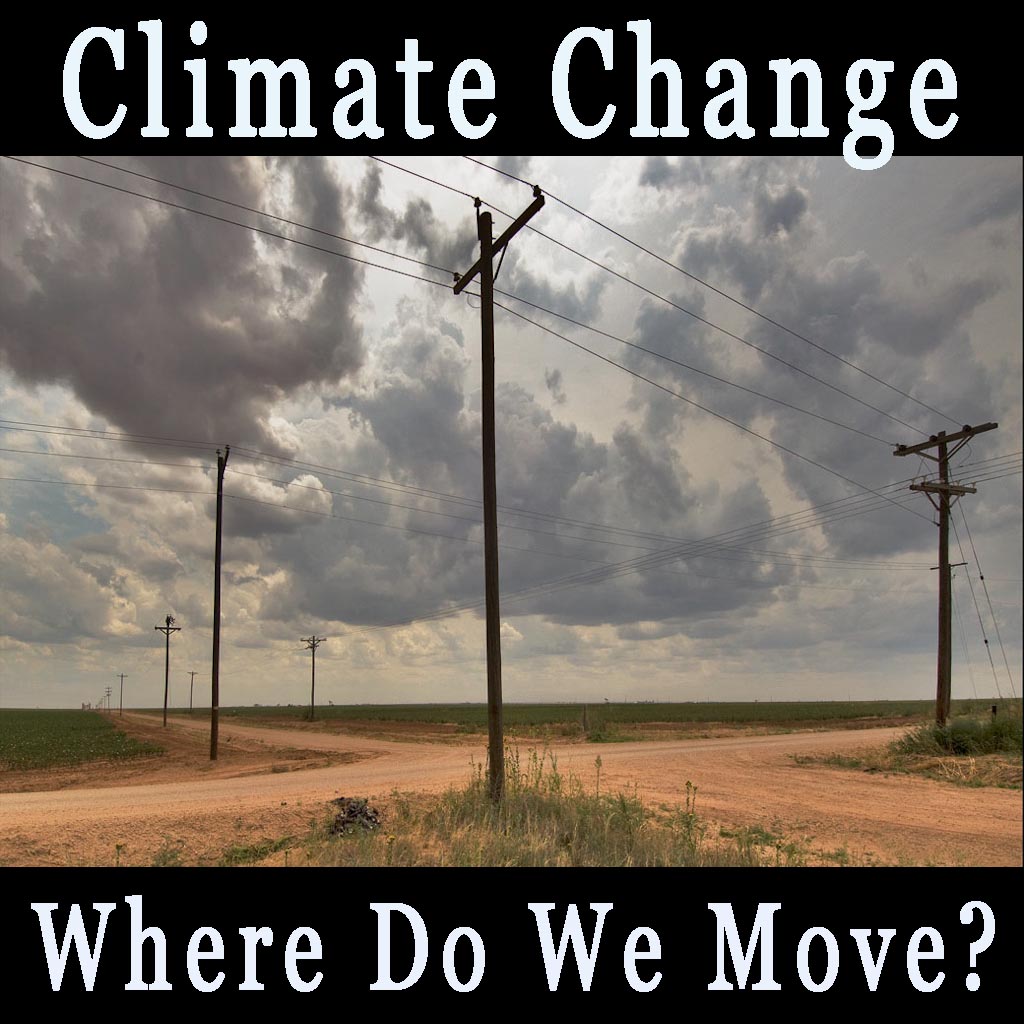
Climate Change – Where do we move?

By Abrupt changes, adaptation, alternatives, Climate Catastrophes, Climate Culture, climate emergency, Climate Policy, Climate Reform, climate restoration, climate solutions, CO2 Removal and Sequestration, Earth systems, Emissions flip, Extreme Weather, feedback, migration, Negative emissions, Scenarios, The Unexpected, What we can do

“Where do we move?” Retirees want to know where  they can escape climate change impacts. Those seeking to give their kids the best life they can want to know. The folks from where I live in Austin want to get out of this infernal heat that has come to dominate our lives with 100-degree days…

Read More

New Media Bias: Climate Change Contrarians Preferred in Media, Shaping Policy AND Science

By Climate Culture, global warming psychology, Messaging, Myths, Psycho, Reports

Oaks killed by drought near Visalia, California. Media Disproportionately Publishes Climate Change Contrarian’s Positions “Climate Change is a Wicked multidimensional problem,” say the authors of this research  from Nature Communications on the disparity between publishing of articles on climate science vs. climate antiscience in the media. The motivation of this study was, “to provide insights…

Read More

Five-Fold Increase in Cool Season Tornadoes

By Climate Catastrophes, climate emergency, Extreme Weather, La Nina, Messaging, Winter Weather

Mayfield Kentucky after the December 2021 tornado outbreak. Image: State Farm Insurance, Wiki Commons Winter Tornadoes Increase 5-Fold because of Climate Change Winter tornadoes have increase 500 percent since 1953 with most of the increase likely being recent. This study looked at 4293 tornadoes reported between 1953 and 2015. Not only did it find tornadoes…

Read More

Climate Change Across America – Fall Filming 2021: Beetle Kill in SW CO and Forest Failure at Mesa Verde National Park

By Abrupt changes, Drought, Earth systems, Fire, forest health, Forest Mortality, Impacts, in-depth and Popular Press, pine beetle

Climate Change Across America Fall Filming Report Southern and Southwestern Colorado Beetle Attack and Forest Regeneration Failure at Mesa Verde National Park We returned to filming after a long covid. No trouble. On the big drive from Texas to the mountains, New Mexico was grand with their indoor mask mandate. Colorado and Texas were about…

Read More

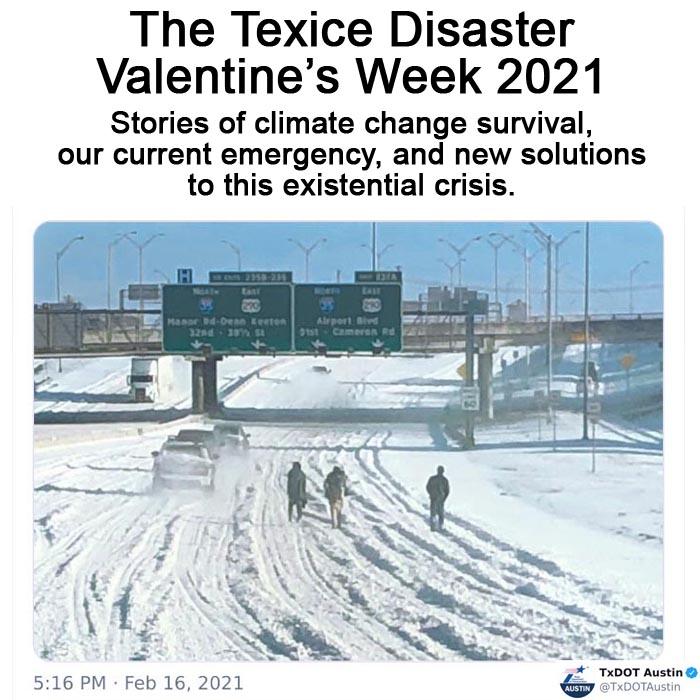
The Texice Disaster, Stories of climate change survival, our current emergency, and new solutions to this existential crisis.

By Abrupt changes, adaptation, Climate Catastrophes, climate emergency, Climate Policy, Climate Reform, climate restoration, climate solutions, CO2 Removal and Sequestration, Earth systems, Extreme Weather, Impacts, in-depth and Popular Press, polar vortex, Solutions, The Unexpected, Winter Weather

Summary: The Texas winter storm disaster was caused by both climate change and poor planning. Climate change is making extreme weather more extreme, and energy generation planning in Texas did not fully take into consideration cascading feedbacks, simultaneous catastrophes, and the extent to which our climate has already created more extreme weather based on warming…

Read More

Climate Change Jokes 2

By Climate Change Jokes

  You know global warming is real when: Hot water now comes out of both taps. You go outside your shadow stays inside. The chickens are laying hard boiled eggs. The trees are whistling for dogs. You no longer associate bridges or rivers with water. Morning dew is an oddity. How many climate scientists does…

Read More

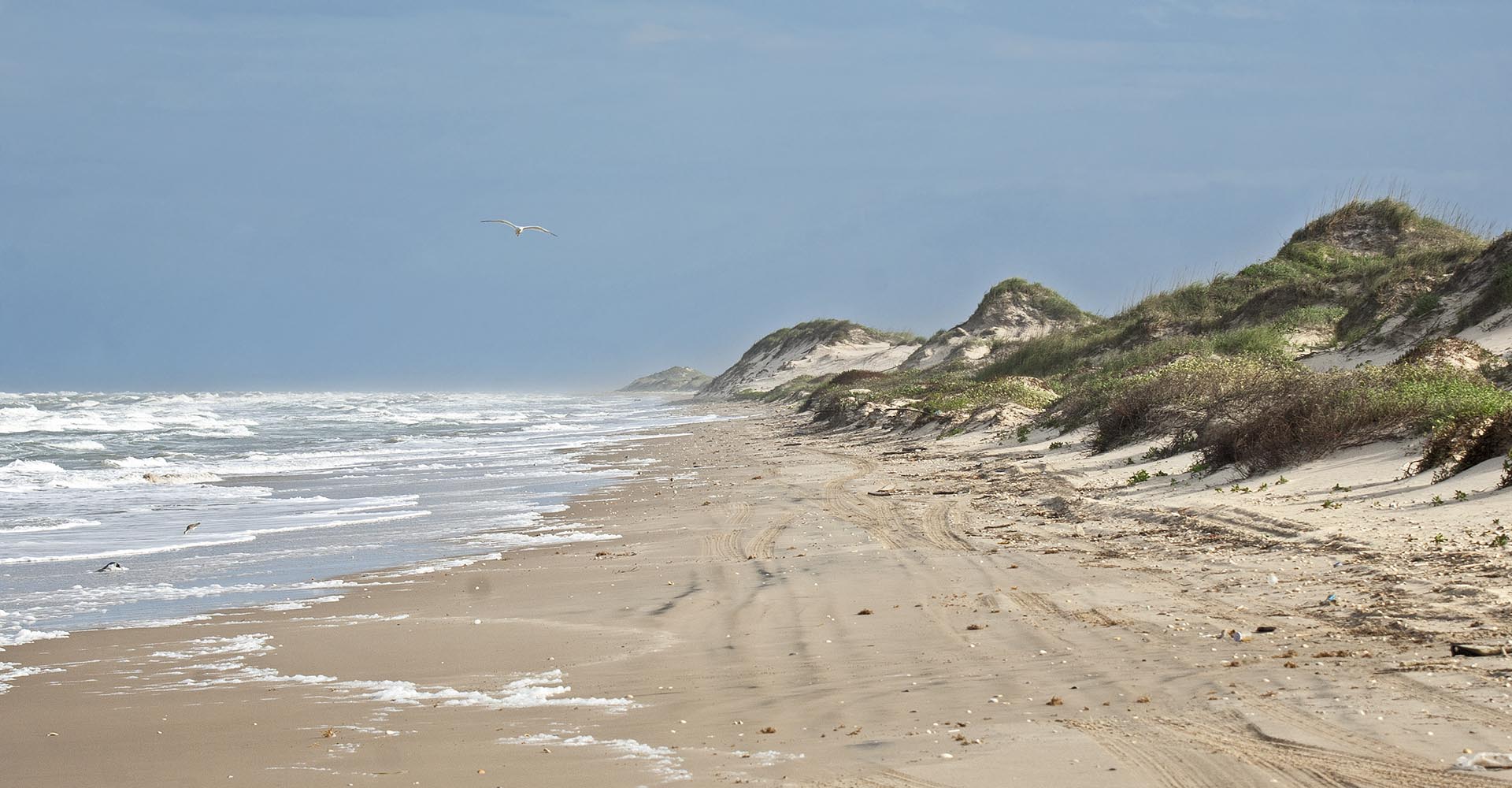
Red kill: Rocky mountain pine bark beetle, Steamboat Lake, Colorado Red kill: Rocky mountain pine bark beetle, Silverthorne, Colorado Red kill: Rocky mountain pine bark beetle, Rocky Mountain National Park, Colorado. Red kill: Rocky mountain pine bark beetle, North of Steamboat Springs, Colorado Pitch tubes: A tree's only defense against bark beetles. Pheromones, or natural beetle hormones, both attract and repel beetles and can be used as defense. Pesticides work too, but application timing is critical and spraying the world is likely improbable. Gray kill: During the first three years needles are bright red, brown and then fall off entirely. Only cold of -20 to -40 straight, in early and in mid winter respectively, can kill the beetle. Those temperatures disappeared about the turn of the 21st century. In areas of human occupation, dead trees become falling hazards quickly and must be removed. Blue slashes and flagging mark trees to be cut. These are white bark pine in Yellowstone National Park. Logged beetle kill, Prospector Campground, Dillon Reservoir, central Colorado. for up to about five years the dead wood can be used for lumber early and pelletized fuel late. After that the tops of the trees are too brittle and fall on logging machinery and loggers. Red kill: Rocky mountain pine bark beetles once attacked mostly lodgepole pines like these in Rocky Mountain National Park. Now there are so many beetles they are attacking even spruce trees. The scale of the kill is immense at more than 20 times greater than anything before. The attack is at 92 million acres.For comparison, Yellowstone is two million acres. Permafrost melt, Denali Highway, Alaska. Tree kill from soil saturation due to melted permafrost. East of Fairbanks, Alaska. Permafrost meltwater pool and drowned trees near Chena, Alaska. Permafrost meltwater ponds, Denali Highway, Alaska. Permafrost meltwater pond, Fairbanks, Alaska (within city limits). A meltwater river flows from beneath the Greenland Ice Sheet. The dark ice is dust from eons of accumulation and surface melt. Ice loss in Greenland has increased over 500 percent in ten years. Surface melting creates a very rough, surface where accumulated dust does not wash away. These drifts are solid ice. Around the perimeter of the ice sheet at low elevations the ice is melting tens of feet per year or more. The scale of melt is immense. This moraine is 100 feet high and the ice once towered over it. The ice flows in rivers and tongues and colder, drier times with more dust can be seen in the layers of older ice, closer to the edge. Also note how much lower the surface is than the moraines deposited along the margins of the ice. Most of this melt is recent as the ice has been in equilibrium since the Little Ice Age that ended 150 to 200 years ago. Less than a mile from its edge the ice sheet can be 1,000 feet tall. At it's center it is 11,000. The calving face of the ice sheet can be over 200 feet tall. The light is fantastically ever changing. Ilulissat Icefjord: Millions of icebergs , five times more than at the turn of the century, pour through Greenland's icefjords. Meltwater drains to the bottom of the ice sheet through holes, or moulins. There it lubricates the flow of the ice sheet, further increasing discharge of bergs. Bubbles of ancient air trapped in the ice have confirmed many hypothesis about how and when our climate has radically changed before. Bergs calve like thunder from massive ice cliffs at all hours of the day. Beach erosion is rapidly accelerating on Padre Island. Mile 30 beyond the 4x4 only sign. This beach was once 200 to 300 feet wide. Padre Island National Seashore, mile 7. Most of the erosion has been recently. Mile 50, Padre Island National Seashore. Padre Island is sinking naturally with little man made subsidence, but before the turn of the 21st century, it wasn't enough to cause massive beach erosion. Sand starvation from inland reservoirs plays a role too, but historically these beaches have been stable. South Padre Island has a little more trouble with more sand starvation from the Rio Grande and less rainfall to grow stabilizing dune grasses. Here, in places erosion is extreme. this is high tide, non-storm conditions. Several places along South Padre have been eroding more or less since the dams went up on the Rio Grande, but since the turn of the century the rate has likely increased significantly. October 2014, King tide, biggest tide of the autumn. Again in 2014, no storms of any consequence on the Texas Coast. Erosion down by the Mansfield jetties is much greater than in 2013. The worst on North Padre in 2013 was a few miles from the Mansfield Pass jetties in the sand starvation zone. The beach has never been wide here and during storms is often the first to erode. But normally, the beach builds back. This erosion is happening in non-storm conditions. At times the four-wheel drive trail is challenging. South Padre, Mile 13 beyond end of pavement. This is the first stage of barrier island disintegration. The beach goes first. The beach protects the dunes, which in turn protect the rest of the island.